About EdgeDepth
Every move, recorded.
So you can go back to it.
EdgeDepth helps independent crypto traders see what actually moved a market: the book, every trade and the liquidations, live and in replay, with the limits kept visible.
Why we built it
A move catches your attention. Perhaps liquidations accelerated, the book went one-sided, or a candle ran. By the time you look it is over, and a candle chart only shows how it ended.
Seeing it for yourself takes a recording that started before the move: the full order book, every trade and the liquidations, on every market. EdgeDepth keeps that recording for every Binance perp, plus Hyperliquid and Bybit, so you can go back to the second it started and replay it tick by tick, without having recorded anything yourself.
What you can do with it
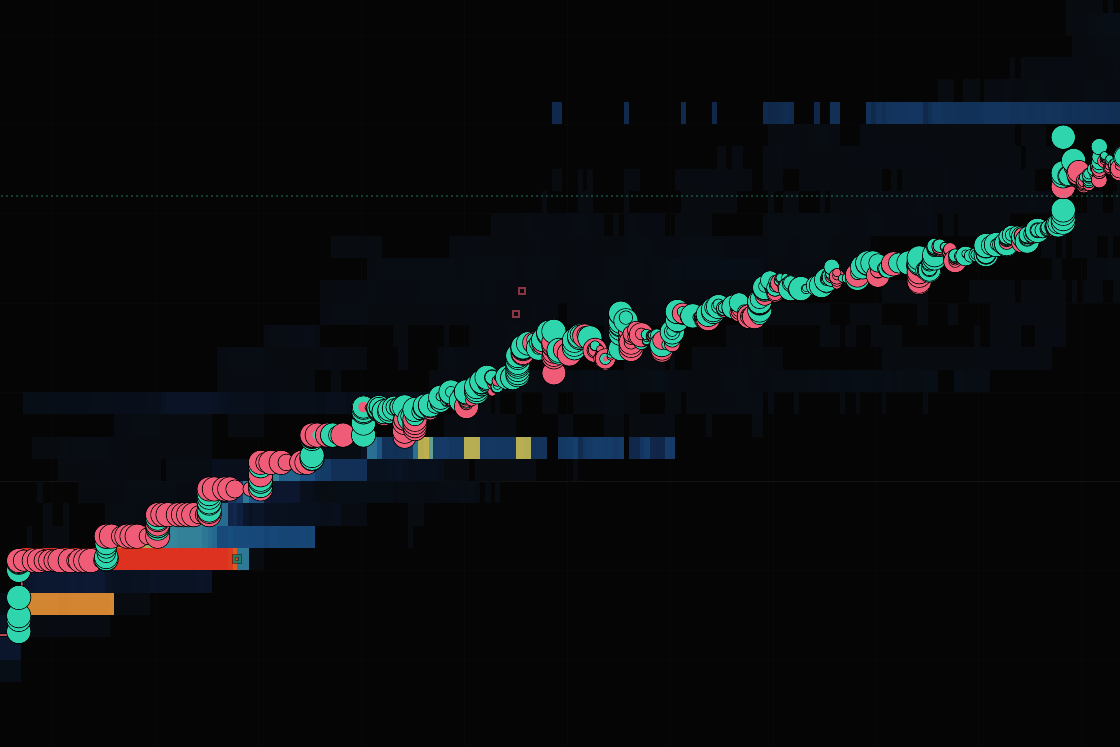
Watch live order flow in the terminal: depth, the tape, footprint and TPO, and reported liquidations. When something moves, right-click the candle and replay from there: pause, rewind and slow it down, with the book and the trades on one clock. The archive of recorded moves and guided lessons give you more to replay.
Read liquidations three ways: what the exchange reported, where rails estimate positions would break, and on Hyperliquid every open position's real liquidation price. The rails are checked against what happened every day, misses included. The terminal and gateway also have open-source editions.
Research, in development
Next is research: find what came before a move, test it across markets and see what trading it would have paid after costs, with the payoff beside every win rate. It is a work in progress; the research page says where it stands. Most ideas end with "no edge, and here is why", which is worth knowing before you trade them.
The Research Workbench, the REST API and MCP use the same engine, and published reports can be read without spending research allowance.
Know what the record can answer
Live coverage includes Binance USDT-M, Hyperliquid and Bybit perpetuals. Current searchable research covers Binance USDT-M. Binance contracts linked to stocks, indices and commodities are perpetual derivatives, not direct equities or futures-exchange feeds.
Coverage varies by market, date and measurement. Longer research history does not imply equally deep order-book or tick-replay history. Exchange feeds can omit observations, and modeled liquidation levels are estimates. Check the coverage beside the study you want to run.
A reproducible historical result is not proof of a profitable strategy. Costs, execution, overlapping observations, repeated experimentation and changing conditions still matter. We make the definition and limitations inspectable so you can decide what to check next.
Independent, built in New Zealand
EdgeDepth is built and operated from New Zealand and is currently in early access. We develop and operate the capture, storage, research and terminal infrastructure.
Questions or feedback: [email protected]. A data issue or licensing question: [email protected]. Send the study or event link so we can investigate the underlying record.